

How to Write Lyrics: A Step-by-Step Beginner’s Guide
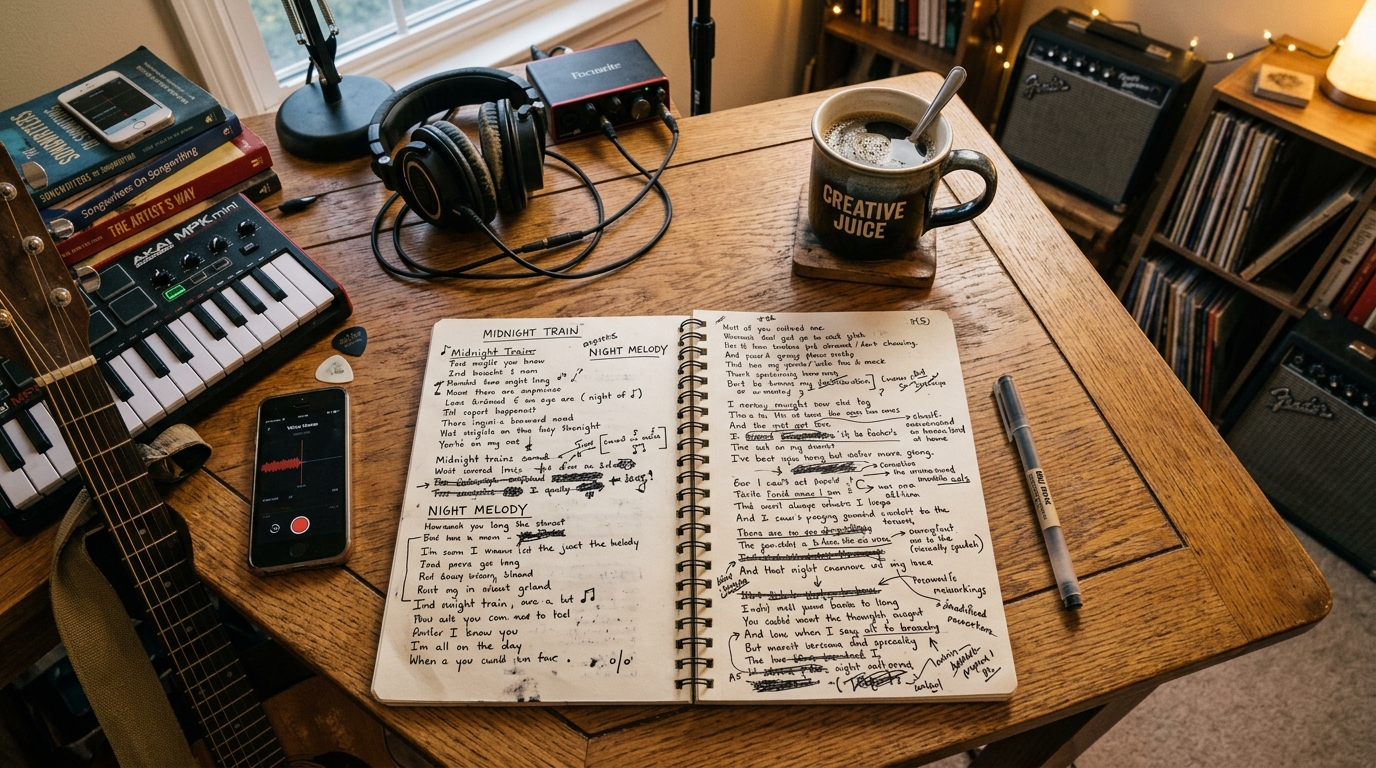
Staring at a blank page is the hardest part of songwriting. You have feelings and ideas you want to express, but the moment you try to put them to rhythm, they sound cheesy, forced, or just plain wrong. If you're wondering how to write lyrics that actually sound like you, you're not alone. Most people get this wrong the first time because they try to write poetry instead of writing for music.
This guide will walk you through the process of writing a song step-by-step. If you're just starting out in beginner songwriting, these practical lyrics writing tips will help you turn scattered thoughts into a finished song structure.
What You'll Need
Before we start, grab these tools:
- A physical notebook and a pen (screens can be distracting)
- Your phone's voice memo app
- An instrument (if you play one) or a simple backing track/beat
Step 1: Find Your Core Concept
Every great song revolves around a single, central idea. This is often called your "seed" or your hook. Don't start by trying to write a first line. Start by asking yourself: What is this song actually about?
Is it about the specific feeling of driving home alone after a party? Is it about the frustration of a one-sided conversation? The more specific you are, the easier the song is to write. Write your core concept at the top of your page in one sentence.
Step 2: Brainstorm Without Filtering
Set a timer for ten minutes. Write down every word, phrase, memory, or image related to your core concept. If your song is about leaving your hometown, write down the street names, the weather, the smell of your old car, and the things you won't miss.
Do not rhyme yet. Do not worry about rhythm. Just get the raw materials onto the page. This is where the real substance of your song lives.
Step 3: Sing the Words to Find Their Rhythm
Lyrics are not poems; they are meant to be sung. Pick a phrase from your brainstorm and say it out loud. Notice where the natural accents fall.
Now, try speaking it over a steady pulse (tap your foot or play a simple chord progression on guitar or piano). Start stretching the vowels and leaning into the rhythm. Your voice memos app is your best friend here. Record yourself trying different melodic shapes with your phrases.

Step 4: Build Your Song Structure
Once you have a few melodic phrases, you need somewhere to put them. The most common structure in modern music is: Verse 1 – Chorus – Verse 2 – Chorus – Bridge – Chorus.
- The Verse: This is where you tell the story. Use those specific, sensory details from your brainstorm here. Keep the melody conversational.
- The Chorus: This is your core concept. It should be the emotional peak of the song, using your catchiest melody. Keep the lyrics simple and memorable.
- The Bridge: This introduces a new perspective or a twist in the story, usually with a new melody and rhythm to break up the repetition.
Step 5: Refine and Rhyme (Carefully)
Only after you have your structure and rhythm should you start worrying about rhymes.
One of the biggest mistakes in beginner songwriting is forcing exact rhymes (like "cat" and "hat" or "fire" and "desire"). It makes your lyrics sound like a nursery rhyme. Instead, use near-rhymes (assonances), which share the same vowel sound but different consonants. For example, "time" and "mind" or "shape" and "late." This opens up thousands of new vocabulary words for your lyrics.
Common Songwriting Mistakes
- Writing without a rhythm: If you just write words down without testing them against a beat, they will feel clunky and awkward when you finally try to sing them.
- Being too vague: Phrases like "you broke my heart" or "I feel so sad" have been used millions of times. Tell us how they broke your heart. Was it a text message? Did they leave a jacket behind?
- Editing while writing: If you stop to critique every line you write, you'll never finish. Let the first draft be terrible. You can fix it later.
Pro tip: Keep a "hook book" or a dedicated note on your phone. Whenever you hear an interesting phrase in conversation, see a weird sign on the street, or have a random thought in the shower, write it down immediately. When you sit down to write, you'll never start from a blank page.
Try This Now: Object Writing
Pick a random object in the room with you right now (a coffee cup, a pair of keys, a window). Set a timer for 5 minutes. Write about that object using your five senses. What does it look, feel, sound, smell, or taste like? Don't write about how you feel about the object, just describe it physically. This drill builds the muscle of writing concrete, sensory lyrics instead of vague emotions.
Next Steps
The secret to writing a song is simply finishing one. Your first song might not be a masterpiece, and that's perfectly fine. Get through the process, finish it, and start the next one.
Once you have your lyrics down, you'll need to figure out the music. If you're building a chord progression and need help understanding how notes fit together, read our guide on major vs minor chords to find the right mood for your new song.